
Writing about this trip is harder than usual, because it will always be (for us) inextricably bound up with a complex mix of sorrow and regret. It was on the books for a long time, starting way back in October 2023 when we signed up with Tanya Burnett of Island Exposures for a diving cruise in Kimbe Bay and the Bismarck Sea on the Oceana live-aboard, preceded by a cultural “sing-sing” showcase in the Highlands, a side of Papua New Guinea we never saw on our two prior PNG dive trips, with Chris Newbert and Birgitte Wilms of Rainbowed Sea Tours, to Milne Bay, back in the late 1990s/early 2000s.
In the fall of 2024, just before his 51st birthday, our beloved brother-in-law Aaron Clark, husband of Steve’s youngest sister Sarah, was diagnosed with pancreatic cancer. For some months, there was cause for cautious optimism. A bad diagnosis, but from imaging, it appeared to be limited-stage disease, not clearly inoperable. Five months of chemotherapy without imaging evidence of progression or inoperability (vascular involvement or metastatic disease) beat up burly and strong firefighter Aaron, but as of late February 2025, he still seemed to be an operative candidate and potentially curable. The statistics were against him. Only 1 in 5 people with this diagnosis are operable; of those, only 1 in 5 who undergo surgery survive long-term.
The surgery is grueling and Aaron was not spared its rigors, with post-operative fevers and a leak with abscess requiring additional procedures.
We saw him with Sarah for dinner in New York in early April, about 5 weeks after surgery. He looked pale but otherwise was very much his usual smiling and lively self.
While we were diving in the Philippines in May, ominous news came. His tumor markers were rising. Repeat CT scanning confirmed his liver was now involved, only 2 months after undergoing the Whipple procedure.
Chemotherapy was restarted, and all focus was now directed toward CAR-T cell therapy, which was Aaron’s only Hail Mary. This is a form of immunotherapy in which a patient’s T cells are collected, genetically modified to express chimeric antigen receptors (CAR), multiplied and then re-infused into the patient, with the modified T cells engineered to target tumor cells. The cancers in which this treatment has the best results are mostly hematologic, not solid.
Along the way, we had concerns but tried to balance being helpful and available with not questioning the treatment plans formulated by his NYU team too obnoxiously.
From a transplant surgeon we work with who trained in New York, we’d obtained a recommendation for a surgeon with whom they felt comfortable. We’d reviewed Aaron’s staging CT scans and were impressed with the image quality. We did wonder why they never incorporated PET imaging into his evaluation, particularly before the Whipple, but didn’t press the issue too hard.
The CAR-T cell therapy was scheduled for July, then postponed to August. On July 1, we celebrated our 36th wedding anniversary with them in New York at Gramercy Tavern. Aaron was his usual jovial self.
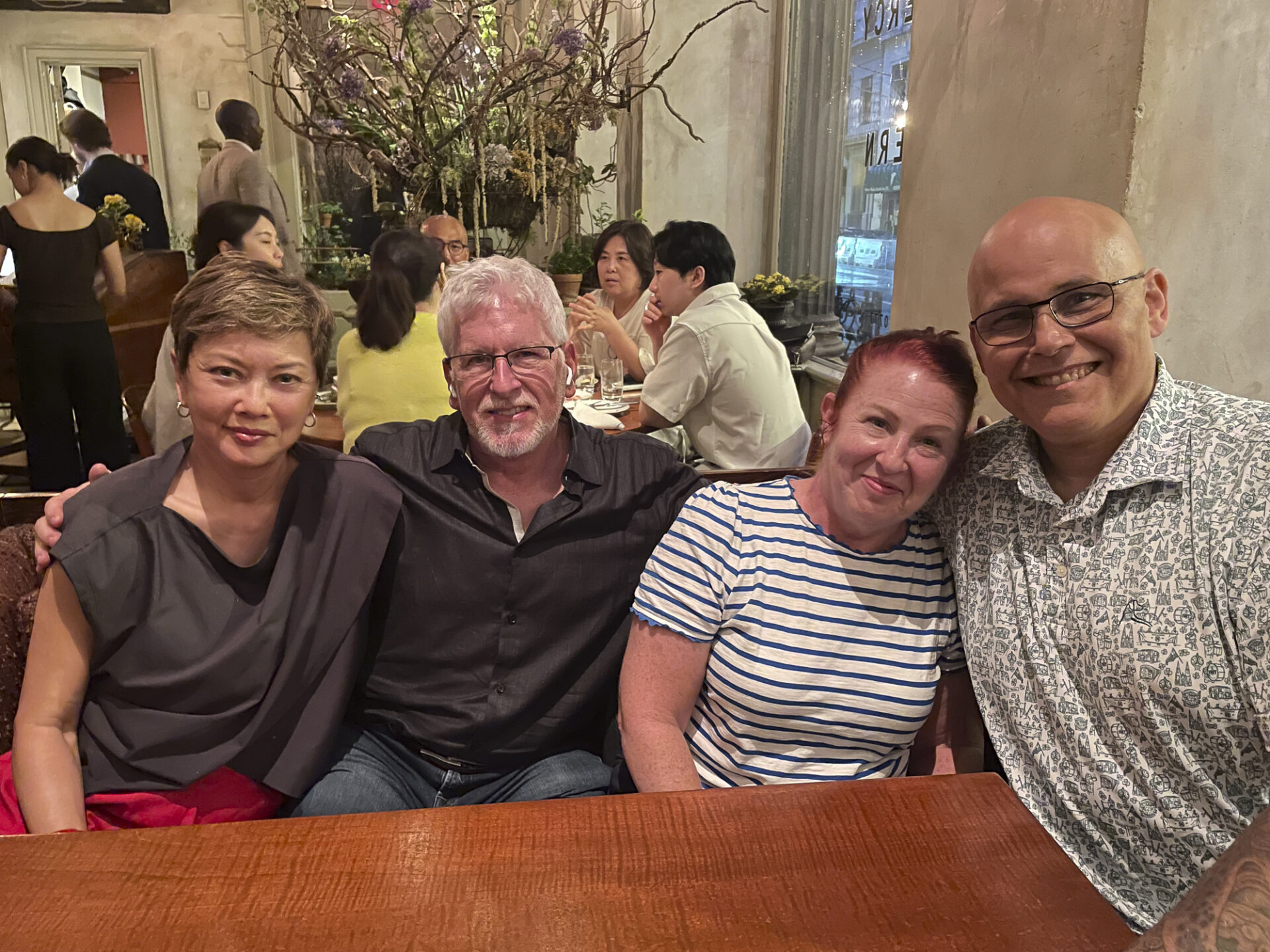
July 1, 2025, our 36th wedding anniversary, celebrated with Sarah and Aaron at Gramercy Tavern. This would also be the last picture we would take together, when we all still had hope that CAR-T cell therapy might give him time that pancreatic cancer was bent on taking. It didn’t work out that way-Aaron died less than 3 months later, one month before his 52cd birthday.
Back in New York in early August, we refrained from seeing them, as we returned from our Paris sojourn with the vestiges of a cold.
Everything fell apart just weeks before our mid-September departure on this trip. During the admission evaluation to the hospital for the CAR-T cell therapy, it became clear that Aaron no longer met the parameters. I could see clearly in my radiologist’s mind’s eye what his CT looked like, with growing liver metastatic masses, encroaching on the bile ducts and replacing the normal liver tissue.
The course correction to palliative care and hospice was swift and abrupt. Aaron declined additional chemotherapy. Without it, progression to liver failure and death was inevitable, perhaps as fast as 2 weeks, maybe as long as 2 months. Sarah and Aaron went home, their dreams of a possible reprieve shattered.
This news threw us into an immediate quandary. We were scheduled to work in the weeks leading up to our September 13 departure. There was no postponing the trip, organized around a yearly cultural festival and a set boat departure date. We could forfeit it, but to what end? Better to see Aaron while he was alive and still himself than to worry about attending a funeral or memorial service. We were scheduled to return to New York the last week in October but it seemed doubtful he would make it that long.
I found a 4-day window in our schedule, a weekend with events that could be rescheduled or skipped, next to a Monday and Tuesday we weren’t scheduled to work. That weekend had been left lightly scheduled for packing, which meant we’d have to pack for this diving and photography expedition before leaving for New York. It was tight, but doable.
So, we went to New York, one week before departing for 3 weeks in Papua New Guinea.
After our Saturday morning JetBlue non-stop flight to JFK was canceled at the last minute (as we learned in the car on the way to the airport), we scrambled for an alternative. It wasn’t non-stop and was delayed, but we did manage to make it to New York a little after 1 am.
We spent Sunday and Monday afternoons with Sarah and Aaron, mostly propped up on the leather couch in the living room, reminiscing about good times we’d shared over the nearly 30 years since Aaron entered Sarah’s and our lives. Back then, he was a muscular Marine stationed at Twenty-Nine Palms and Sarah was a hospice nurse in San Diego. Their wedding 26 years ago at a family favorite, the Twenty-Nine Palms Inn near Joshua Tree, was the one and only wedding where I was the official wedding photographer. I had to call a professional photographer friend for advice on the optimal film choice for skin tones. I acquired an L-bracket support system so I could quickly flip from horizontal to vertical orientation and back. As the photographer, I had an unusually good vantage point for witnessing a funny exchange between Sarah and her father, David. After escorting her up the aisle, David was still standing there, presumably flustered, as Sarah hissed, sotto voce, “Dad, sit down!” I remember Aaron wore sneakers with his suit, a fashion-forward choice for the time
In New York, Aaron’s energy level was waxing and waning, but steadily ebbing away. He was sleeping more and more and simple movements (shifting in position, standing up, moving to another room) cost him dearly. The liver failure manifested as a large volume of fluid distending his abdomen, with a surgery-related abdominal hernia adding to his misery. In this arena, we had nothing to offer medically, only our presence and restraint in trying not to overstay or tire him too much.
Our timing for this visit was perhaps as good as it could have been. Reports from Steve’s older sister Susan, who drove from Buffalo the following weekend after we were back in California, made clear the inexorable trajectory, as his disease continued to gain the upper hand.
With these events very much on our minds, we left home from LAX on Saturday, September 13, arriving in Brisbane on a sunny Monday morning, September 15, 2025. We had a day to play and a night’s rest in Brisbane before continuing on to Port Moresby, PNG’s capital, the following afternoon.
Monday, September 15, 2025
Brisbane
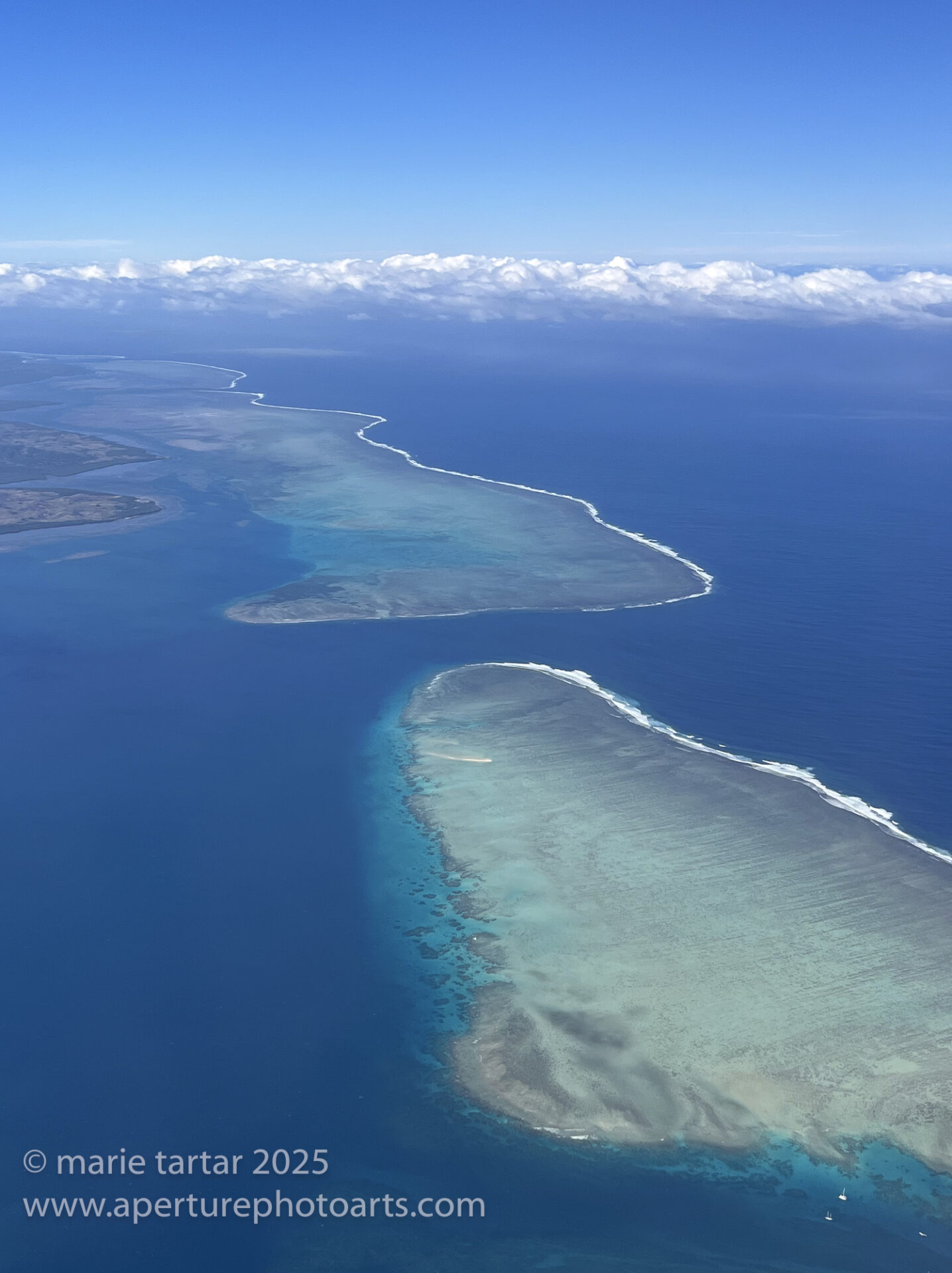
It had been many years, on the order of 20, since we were in Australia! The Brisbane area looked wonderful from the air.
More than two decades ago, we (Steve, Greg and I) were unexpectedly waylaid for a day in Brisbane. We were en route to the Solomon Islands on another Chris Newbert trip. At the Solomon Air counter, actively checking in, our group learned Solomon Air had been grounded, that very morning. Steve remembers this was due to insufficient rest periods for the pilots and crew. So, with an unexpected whole day in Brisbane, we went to Lone Pine Koala Sanctuary. Back then, koala cuddling was permitted and I vividly recall the feel of the koala’s warm, furry and eucalyptus-fragrant body in my arms, something like a large fuzzy baby with long fingernails.
Koalas came under severe pressure more recently due to habitat loss related to the terrible wildfires that raged in Australia in January 2020, just before the Covid-19 pandemic displaced all other news from the world psyche. At the time, I had my first gallery show, a two-woman exhibition called The Tonic of Wildness, with a wildlife photographer from England, Trai Anfield. The reports from down under were so distressing, I donated half of my proceeds to a koala rescue organization.

Finding a koala awake and not concealed by eucalyptus is the challenge of koala photography!
Although holding a koala is no longer allowed, observing them at close range, as well as other Australian fauna, struck me as a great way to spend our afternoon in Brisbane.

Lone Pine Koala Sanctuary is also home to other notable Australians, including Tasmanian devils, kangaroos and wallabies.
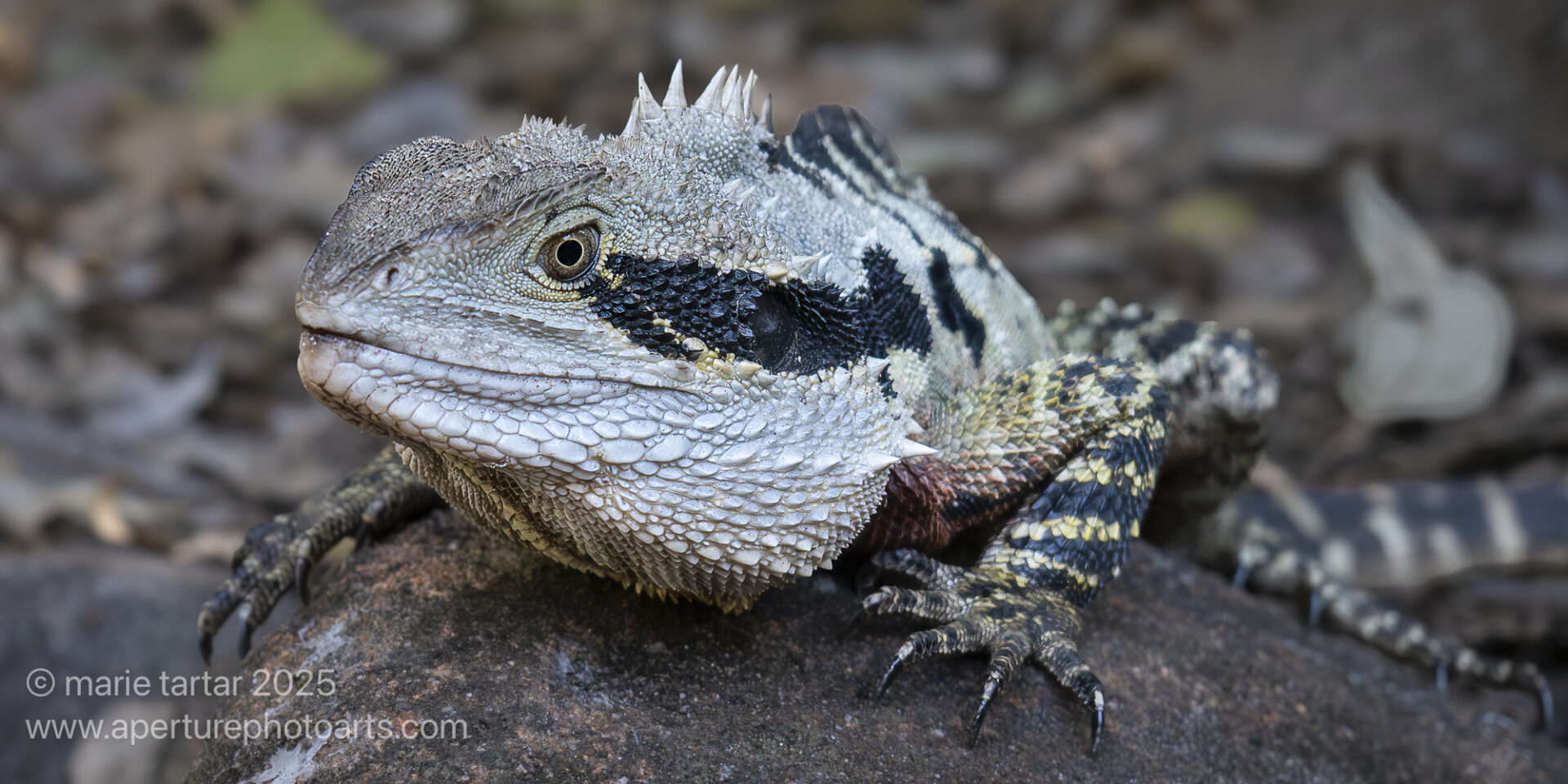
Australian Eastern Water Dragons (Intellagama lesueurii) were abundant at Lone Pine Koala Sanctuary in Brisbane.
Being outside, with sunlight and a little exercise, was the perfect recipe for staying awake and staving off jet lag collapse.
I had always regretted not doing the Harbour Bridge walk when we had the chance, passing through Sydney en route to PNG on those long-ago Chris trips. I had to twist Steve’s arm a little to persuade him to climb Brisbane’s Story Bridge with me, but he ultimately capitulated.

Brisbane’s Story Bridge, lit up at night, and looking mighty tall for a climb from the ground.
I selected the Twilight walk to see the sunset and the city lights come up. We barely made it back from Lone Pine (Uber snafu) in time to suit up in a jumpsuit and harness. There was a spectacular view from the bridge, which spans a horseshoe bend in the Brisbane River. Steve enjoyed it so much he actually suggested we buy the souvenir photos (climbers cannot take cameras or even their phones).
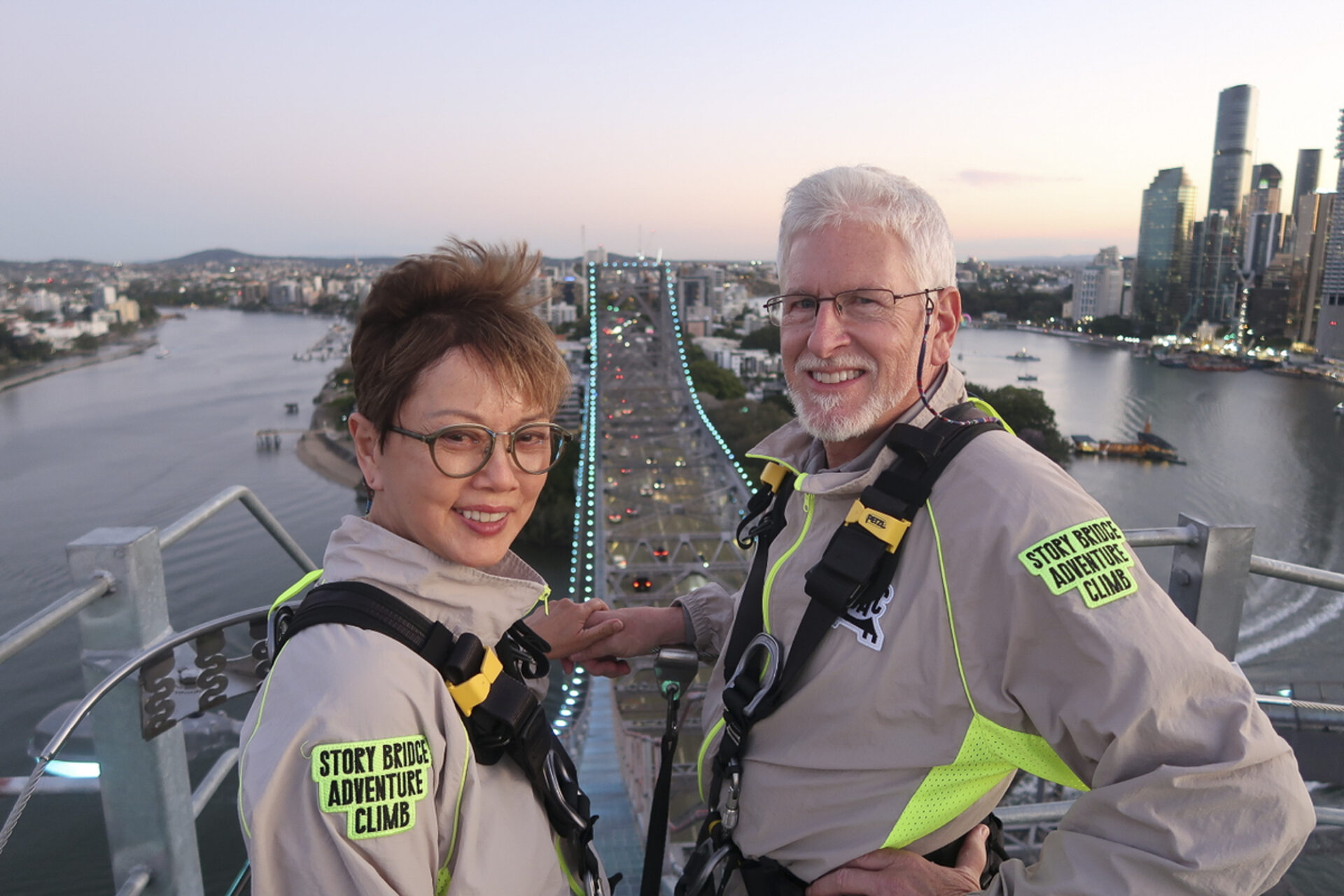
HIgh above Brisbane, clad in jumpsuits and climbing harnesses and clipped to the Story Bridge: We finally broke down and bought that package of souvenir pictures! We were required to doff earrings, clip our glasses to our collars, shake our hands to prove our rings were firmly anchored, all precautions against an errant object dropping on the cars whizzing past underneath the climbers.
We capped off our day in Brisbane with dinner at a nice Chinese restaurant, Stanley, one of a cluster of restaurants at the Howard Smith wharf complex at the foot of the Bridge.
Tuesday, September 16, 2025 (PNG Day 1)
We had time for a morning walk before heading to a restaurant Lloyd (a friend we met on our Japan trip in February) had mentioned, the Pig & Whistle, very near our hotel. Our walk took us to the riverfront, from which we could see a sculptural bridge, which proved to be a pedestrian bridge named for the first aboriginal member of Parliament, Neville Bonner.
Arriving at the Pig and Whistle at 10 am, it turned out they were open, but only for drinks. The kitchen wouldn’t open until 11 am, so we ended up back at the hotel. The avocado toast which sounded good sported too much feta cheese and was drippy with olive oil.
We met up with Barb and Kate at the Brisbane airport. They had flown in from San Francisco just that morning. Barb had to sprint to make the flight, as her flight from Chicago was delayed enough to endanger her connection.
Installed at the Sanctuary Hotel in Port Moresby, we had to repack to leave our dive gear and underwater photography gear in storage. It took several attempts to get our hand luggage into range of the weight limit, but ultimately, it wasn’t weighed, much to our great relief.
We could hear distant fireworks. Our visit coincided with the 50th anniversary of PNG’s independence from Australia.
Wednesday, September 17, 2025 (PNG Day 2)
We had an early morning flight to Mt Hagen on a carrier not even listed on the departure lounge board. Thankfully, we did not encounter the chaos Tanya and the rest of the earlier group had at the airport a few days before.
At Rondon Ridge, at 7100 feet elevation, we strolled the grounds and had a leisurely lunch. Afterward, we were probably the first group of visitors to the Lodge’s newly inaugurated museum, Bates Haus Tumbuna, formed from a private collection of indigenous art accumulated over 60 years by Bob and Pam Bates. The official opening was the prior day, presumably timed to coincide with the Independence 50th anniversary celebrations. A curator from New Zealand, Sandra Payne, took us through the collection.
Our late afternoon arrival at Kumul Lodge at the opposite end of the Waghi Valley was in time to quickly grab a long lens for a bird shoot. The lush grounds include a cleared area around the rustic lodge, ringed by stands on which enticing fruits were speared, bringing in a variety of beautiful birds.
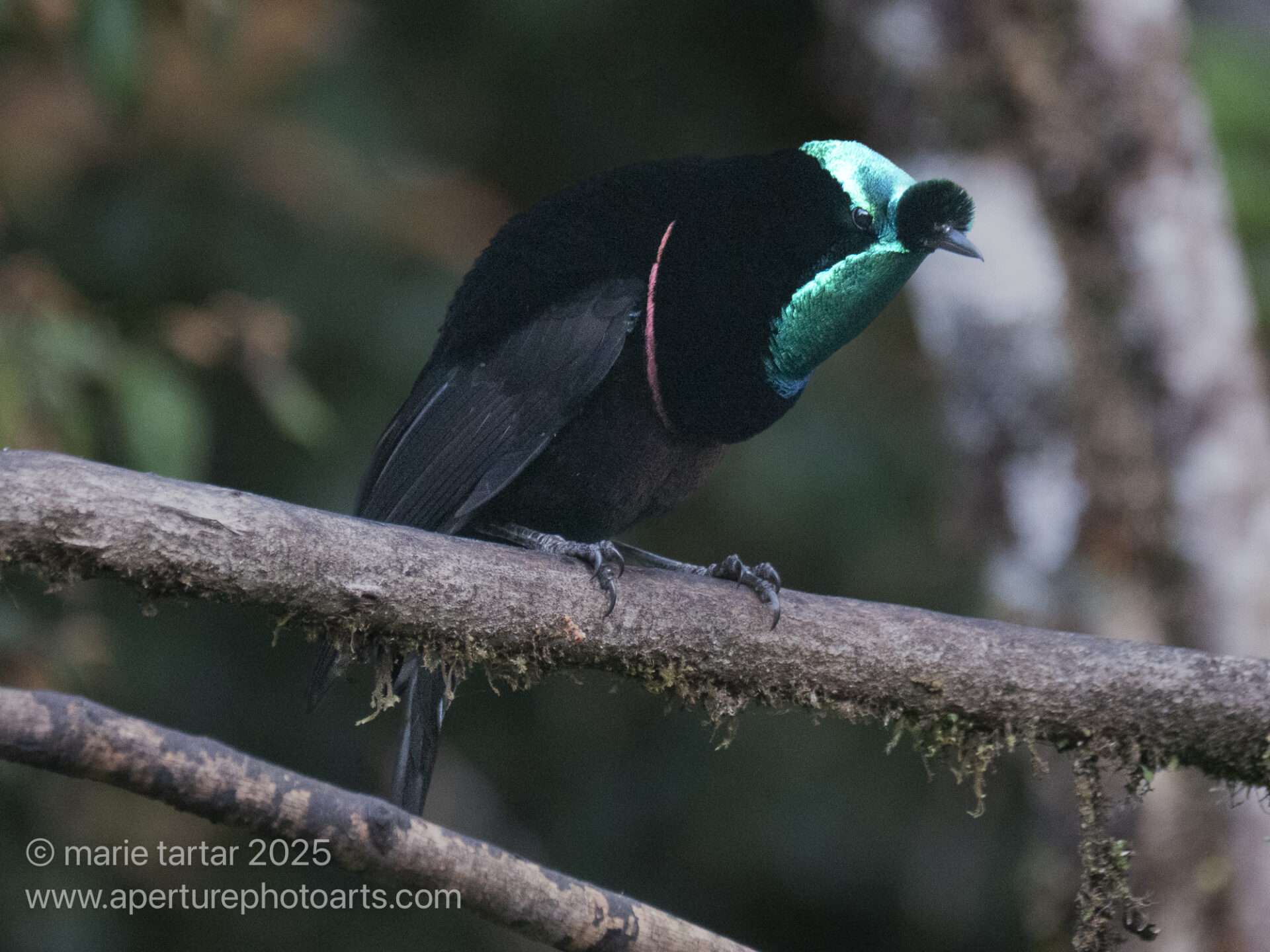
A beautiful bird of paradise, the male ribbon-tailed astrapia, at Kumul Lodge in PNG. (Shaw Mayer’s astrapia (Astrapia mayeri))
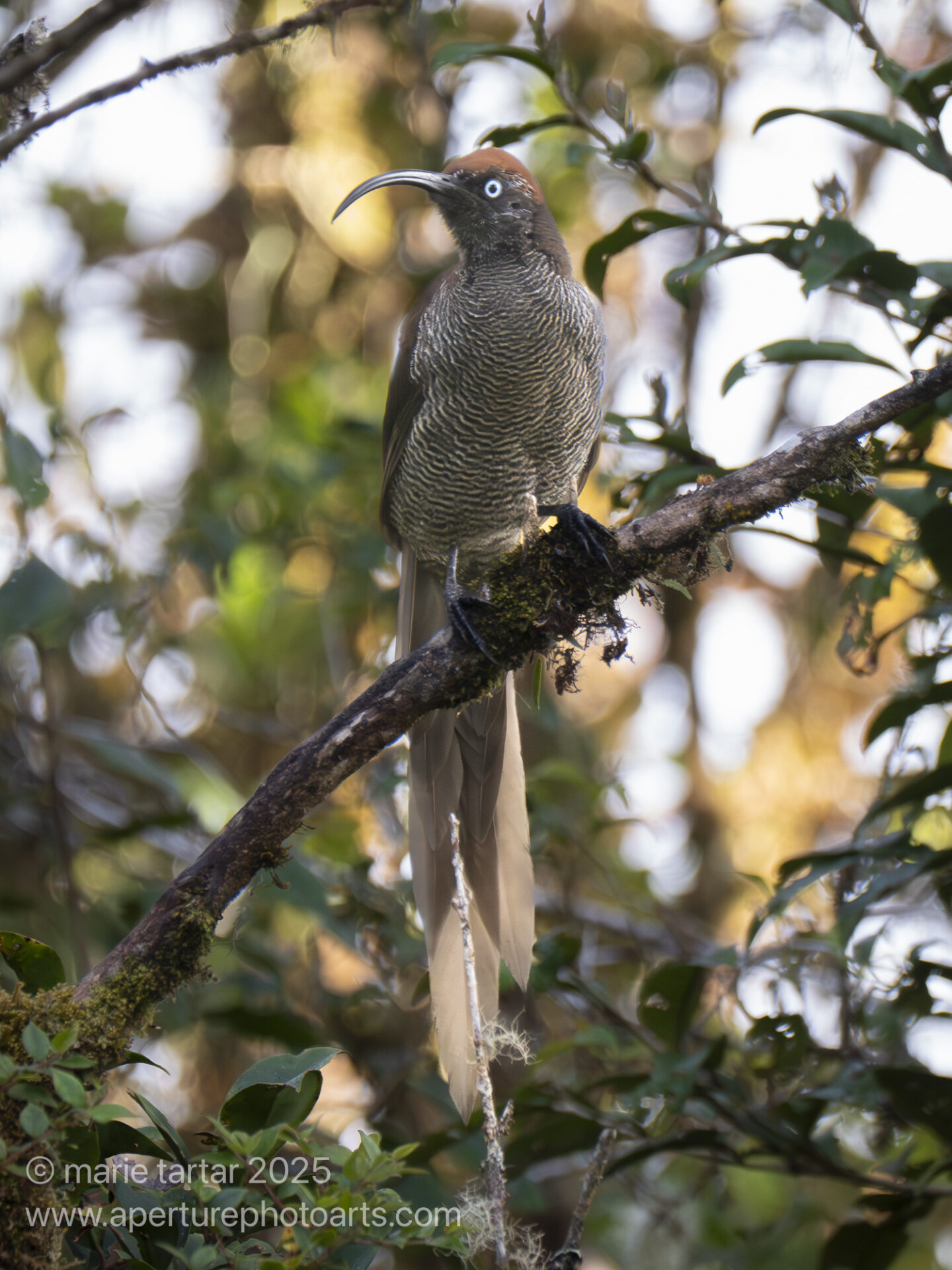
Another gorgeous bird of paradise! Female brown sicklebill (Epimachus meyeri).
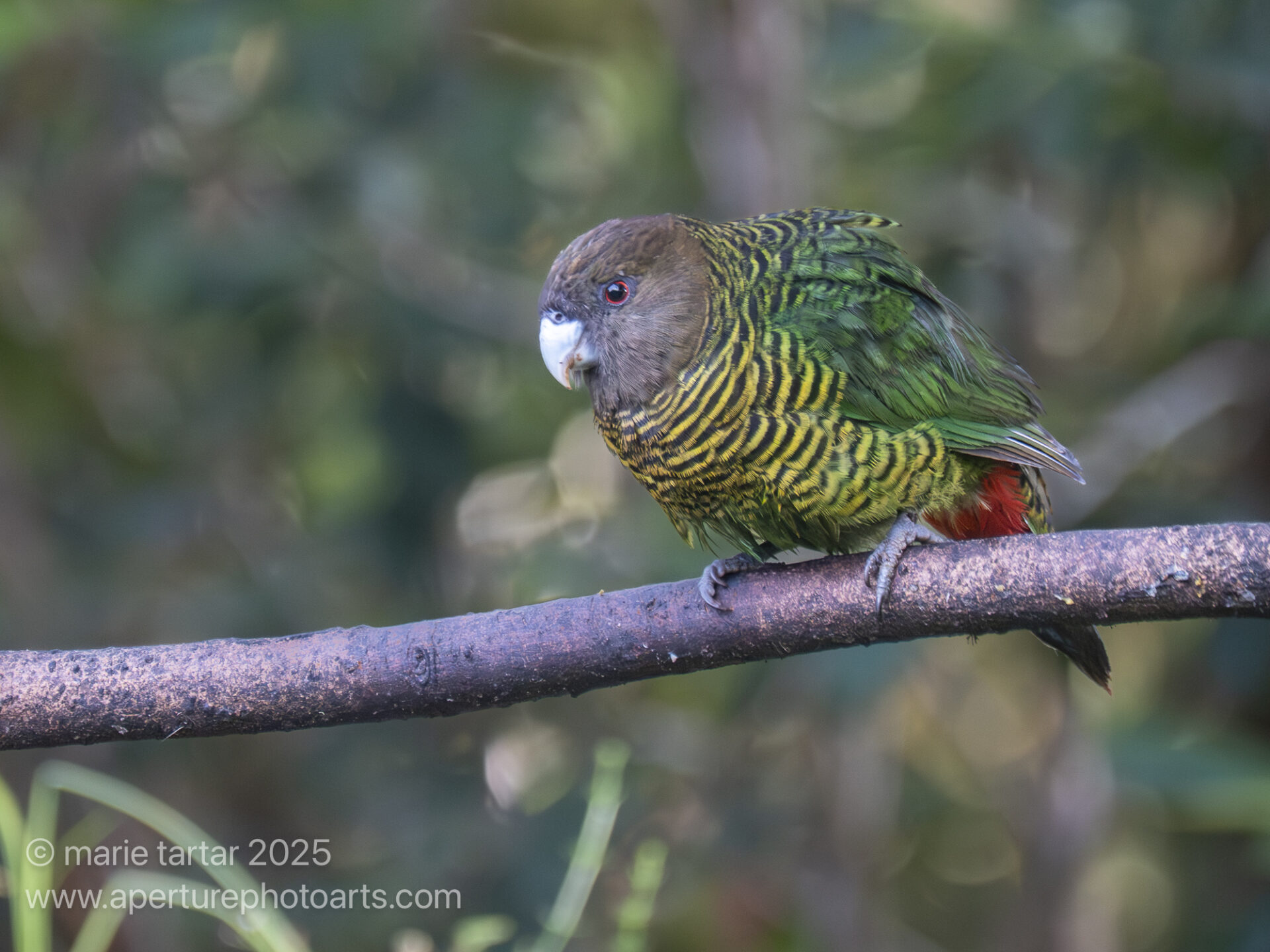
Female Brehm’s Tiger-Parrot is distinguished from the male by the absence of a yellow collar ((Psittacella brehmii)) bordering the brown head.
At rustic Kumul Lodge, we were united with the rest of the group (Tanya, Greg, Fletcher and John Forbes, Robin and Gary Schiendelman, Donna and Bill Thompson and Diane and Brian Volk), who arrived a few days earlier for a stay at Tubo Lodge at Lake Kutubu. When we originally signed up, Lake Kutubu was the destination for the shorter optional add-on, but along the way, the festival dates were changed, along with our itineraries. Except for Diane and Brian, we had traveled with everyone before, on one dive trip or another. We also met our fearless Aussie leader, John Ganan of Flynn’s Tours.
Thursday, September 18, 2025 (PNG Day 3)
We spent a chilly night in our clothes at Kumul Lodge at 9000 feet elevation. Our electric blanket seemed only to offer heat to our toes. It was cold enough in the morning that the thought of undressing to take a shower was unappealing.
I enjoyed another bird photography session around the property before our 7:30 am departure via the Highlands or Okuk Highway.

This Common smoky honeyeater (melipotes fumigatas) is one of four species in the Meliphaidae family and was the most abundant bird we saw at Kumul. The bright ring around the eye can be yellow, red or a mixture. Tanya saw one flush, changing from yellow to red as she watched it.
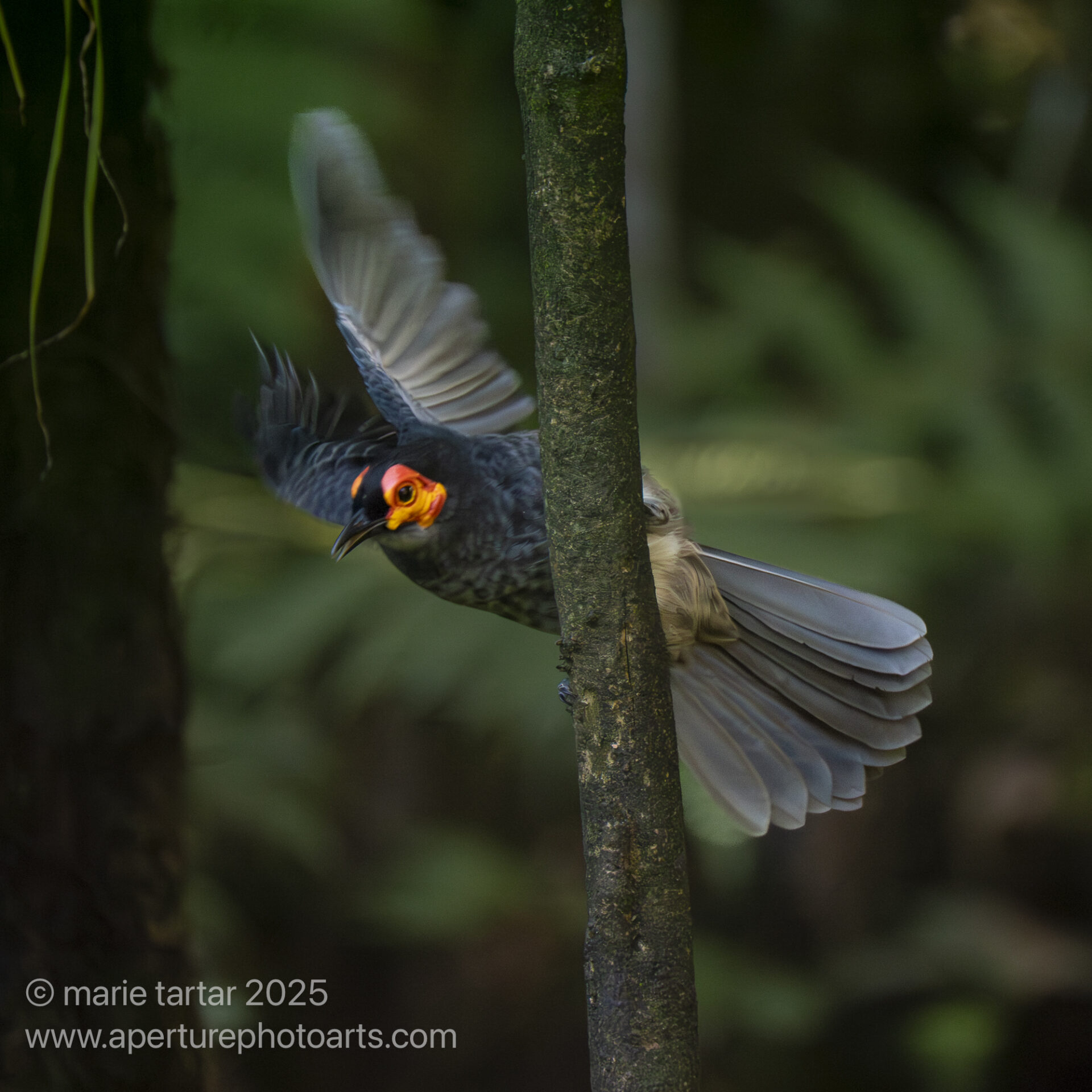
Common smoky honeyeater with circumorbital skin patch flushing red, Kumul Lodge, Western Highlands , Papua New GUinea.
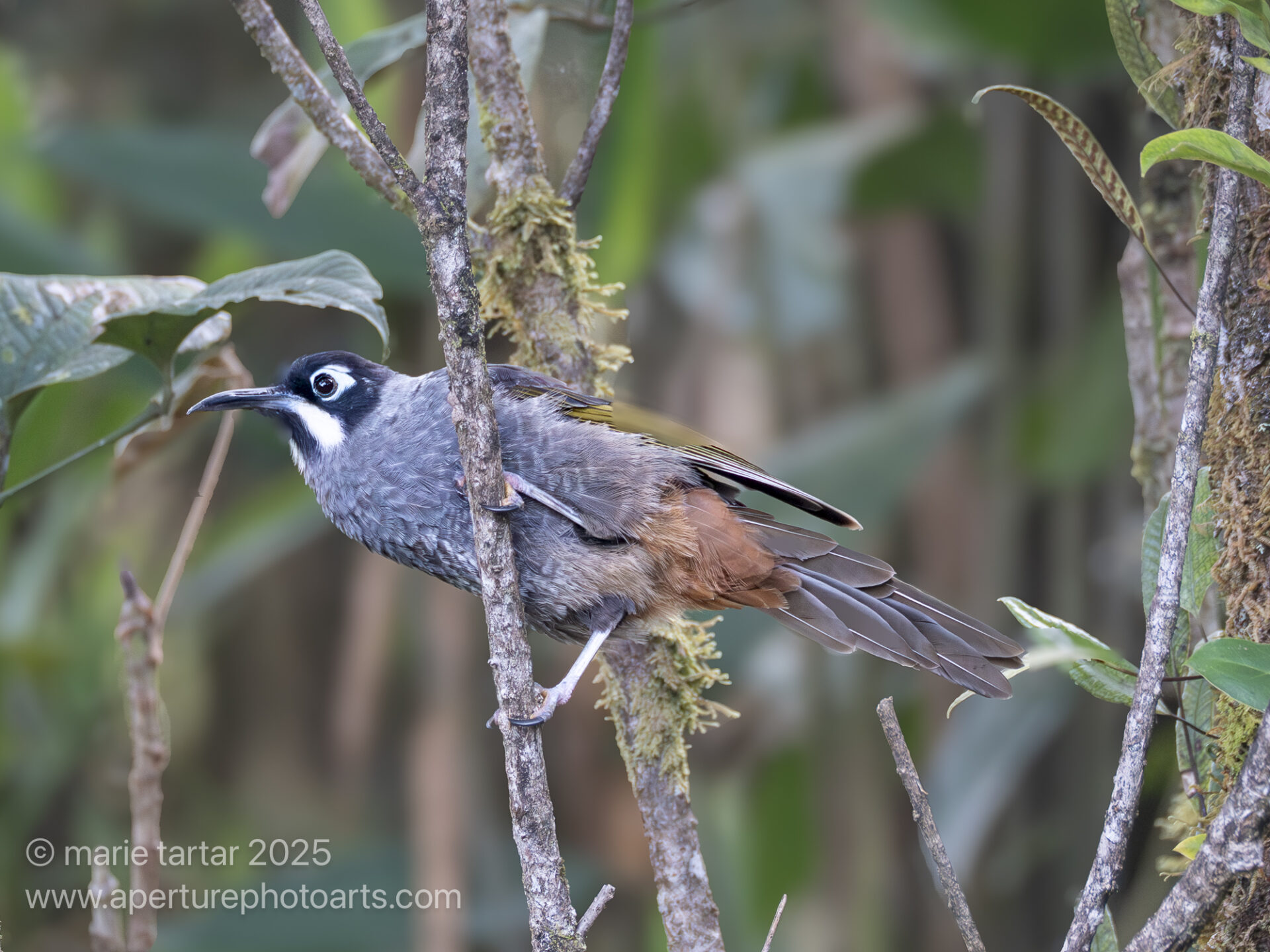
Belford’s melidectes (Melidectes belfordi) is another species of honeyeater we saw at Kumul Lodge, Western Highlands, PNG.

Brown sicklebill is one of three species of birds of paradise which can be seen reliably at Kumul Lodge in Papua New Guinea.(Female, Epimachus meyeri)
Departing Kumul Lodge, we were off onto the cultural show segment of the trip, a convenient place to break up this narrative. To be continued…in Goroka and a spectacular show of tribal costumes, customs and dances. Here’s a preview:
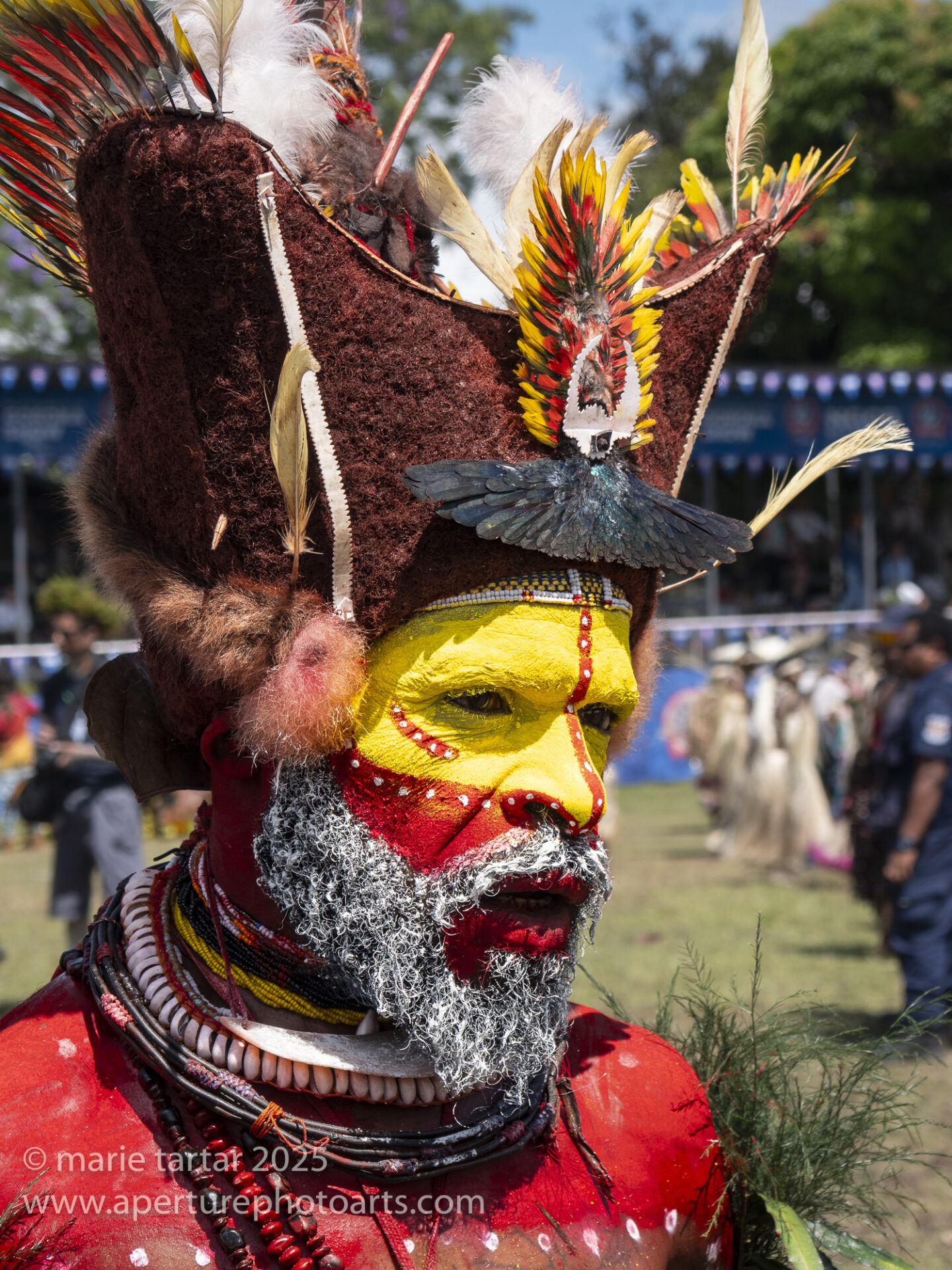
Extraordinary body decoration with colorful pigments, bird feathers, necklaces and a helmet of hair distinguish the Huli wigmen at the annual Goroka Show in Papua New Guinea.
-Marie